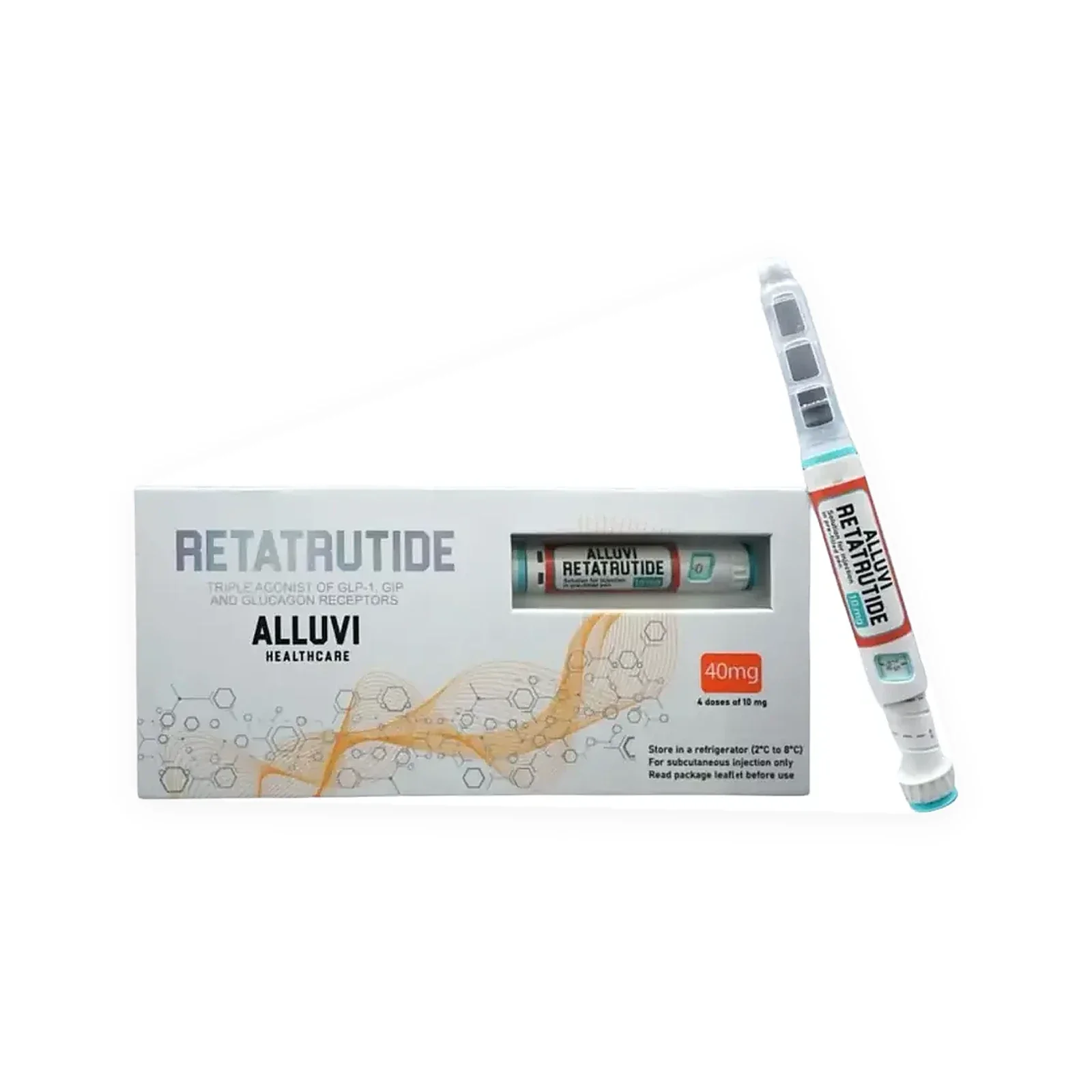
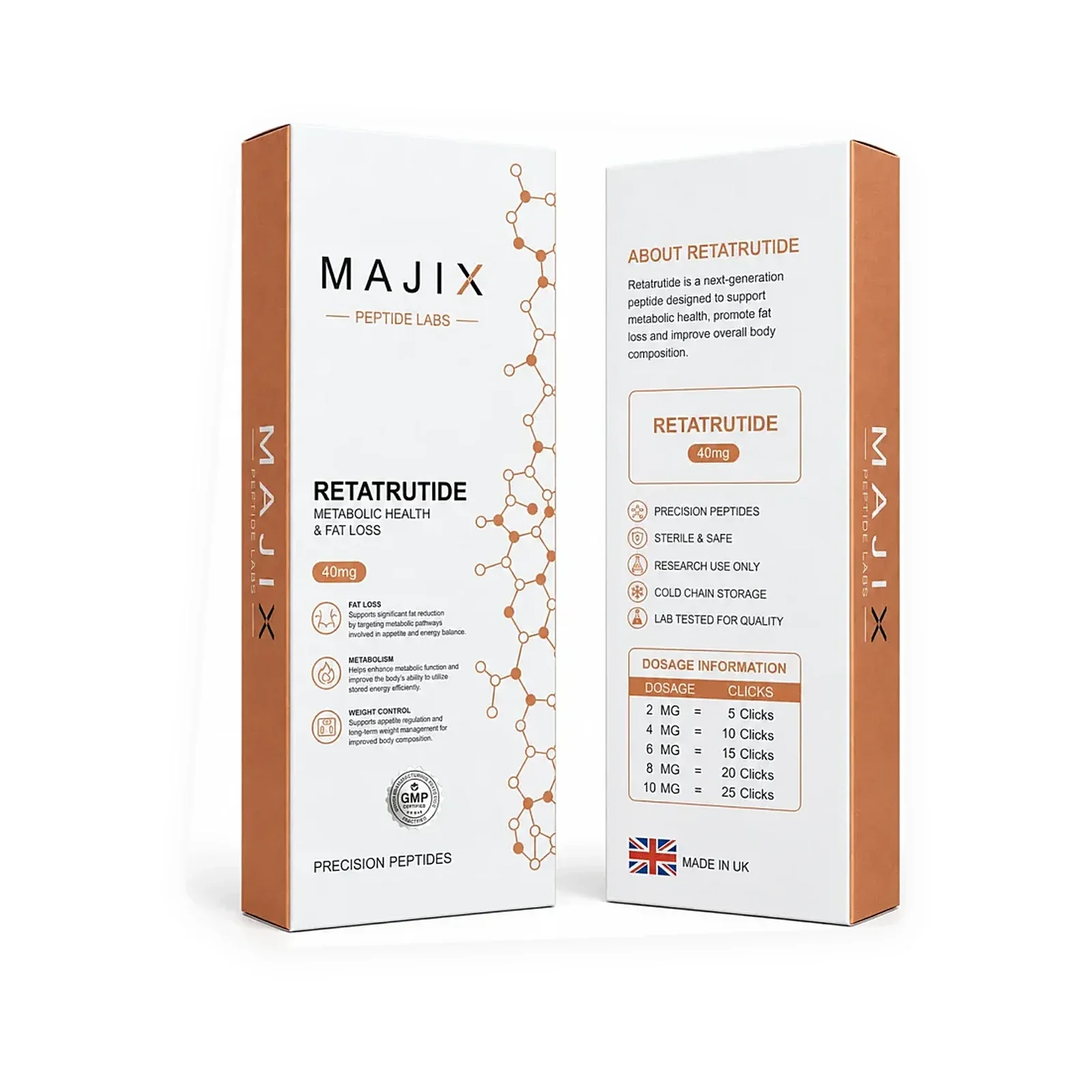
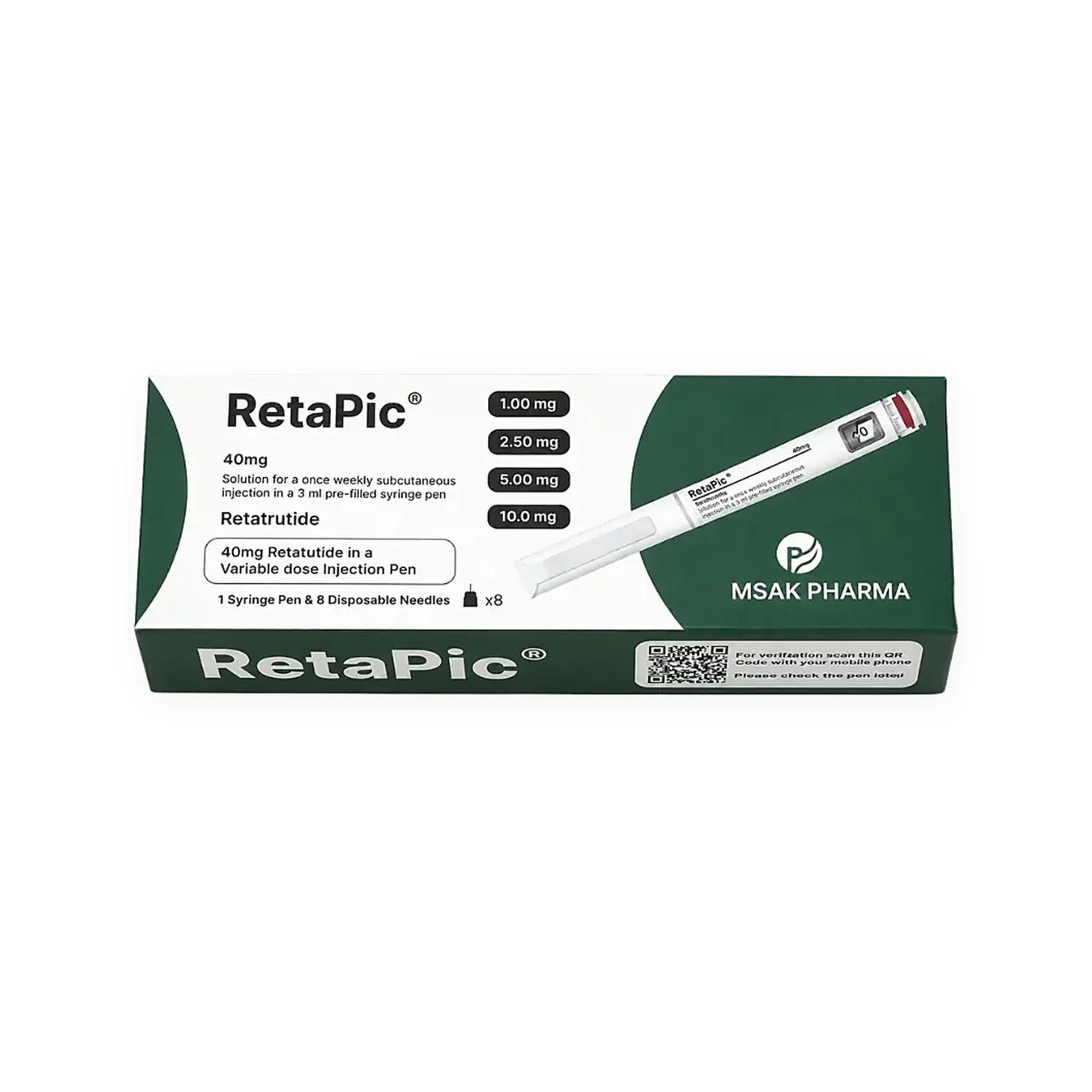
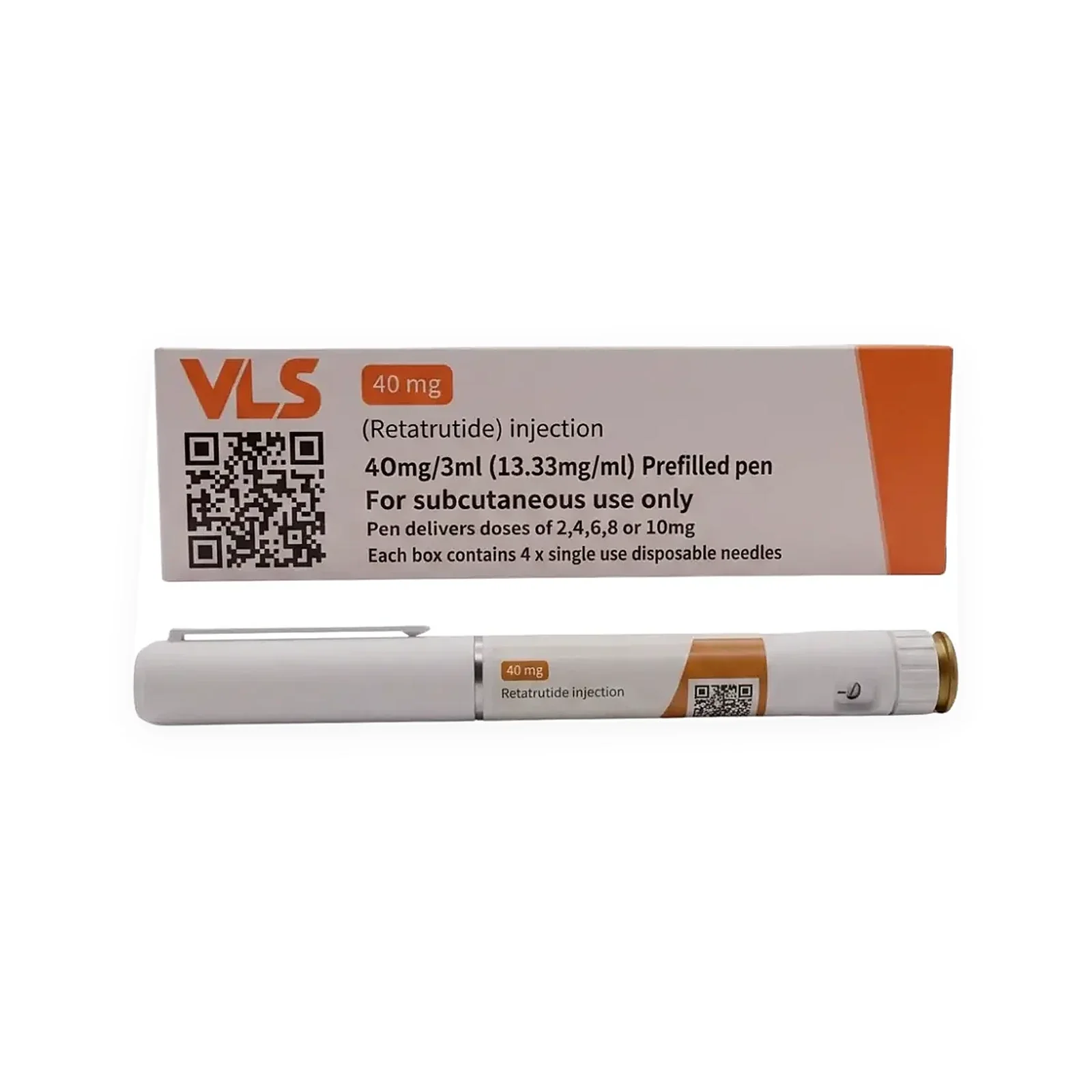
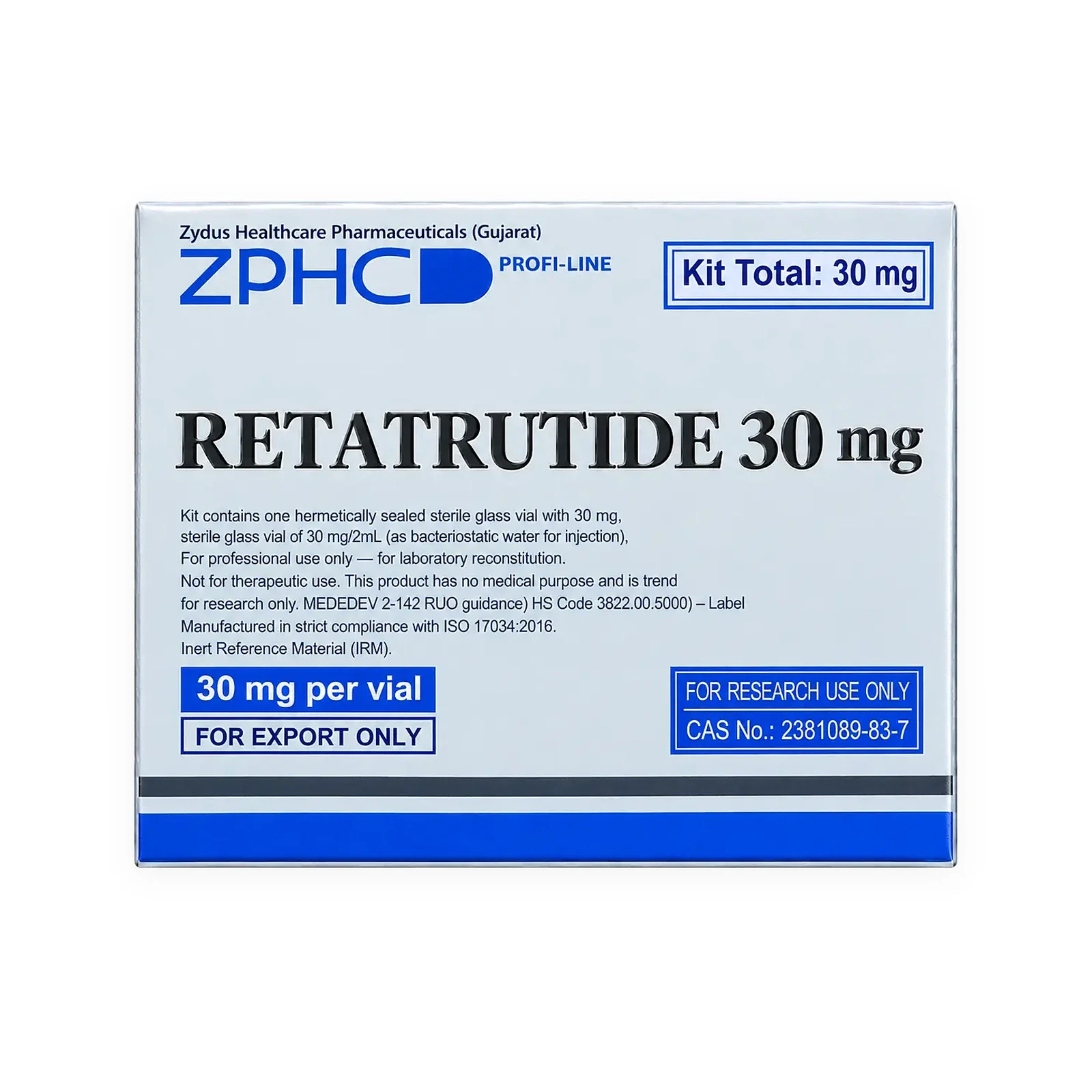
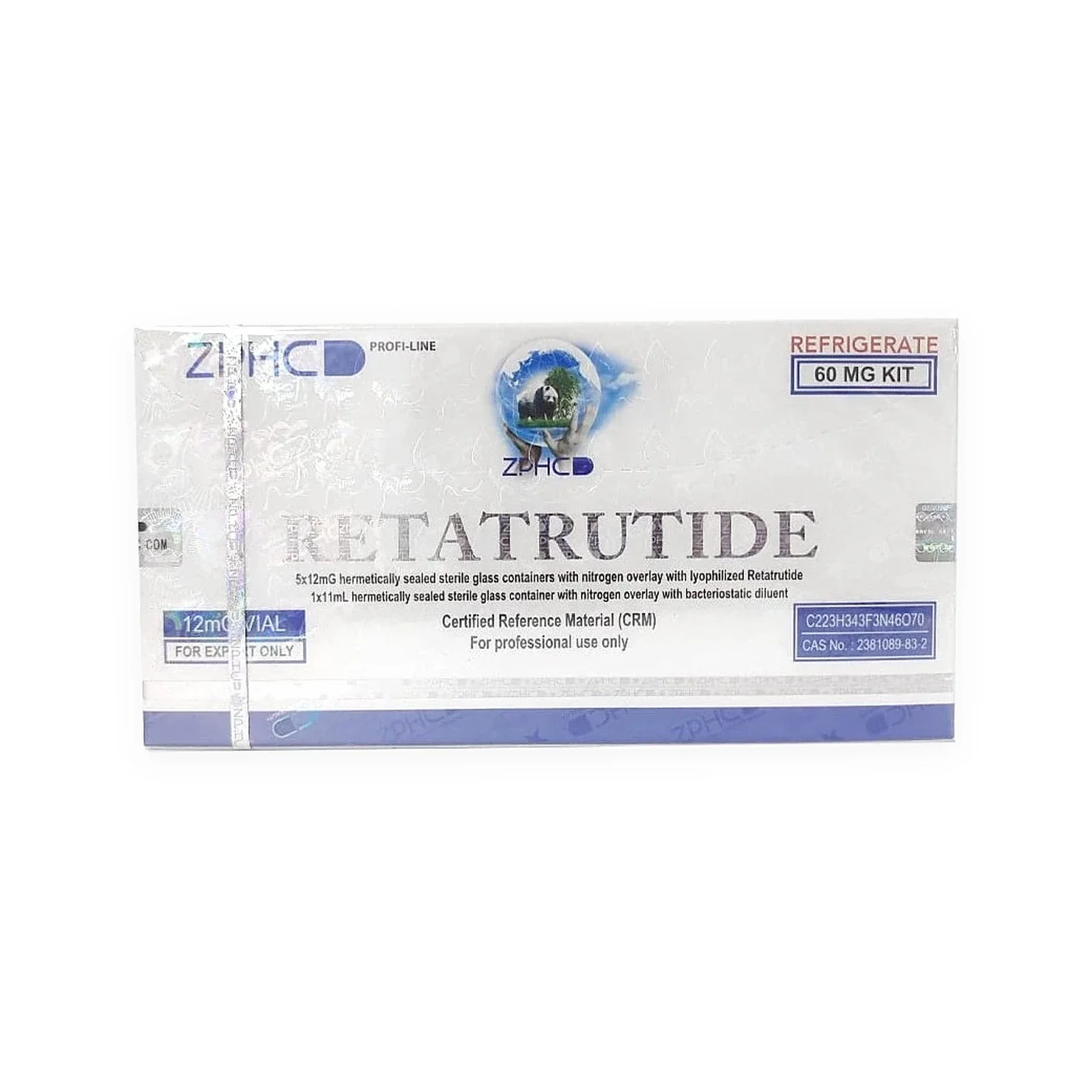
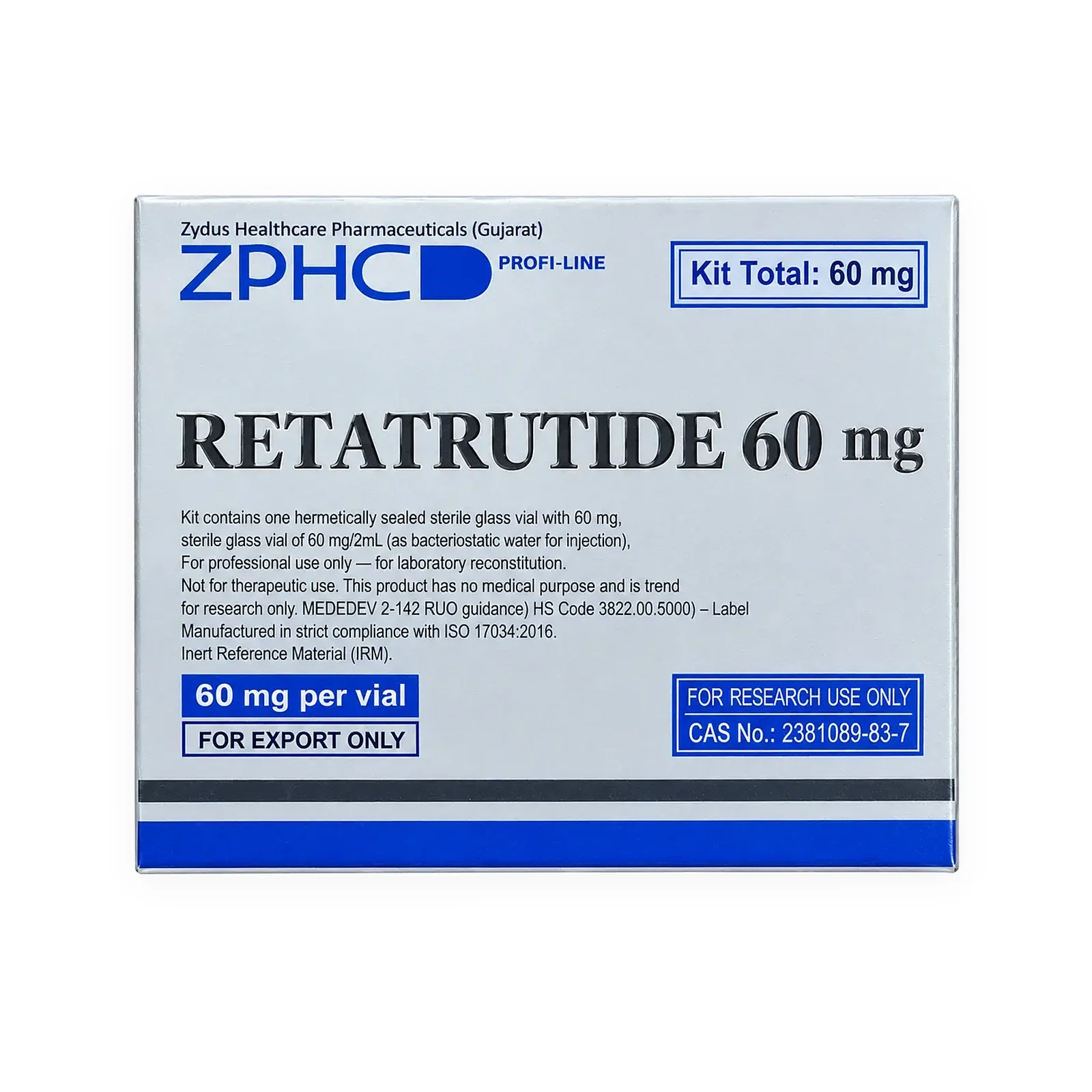
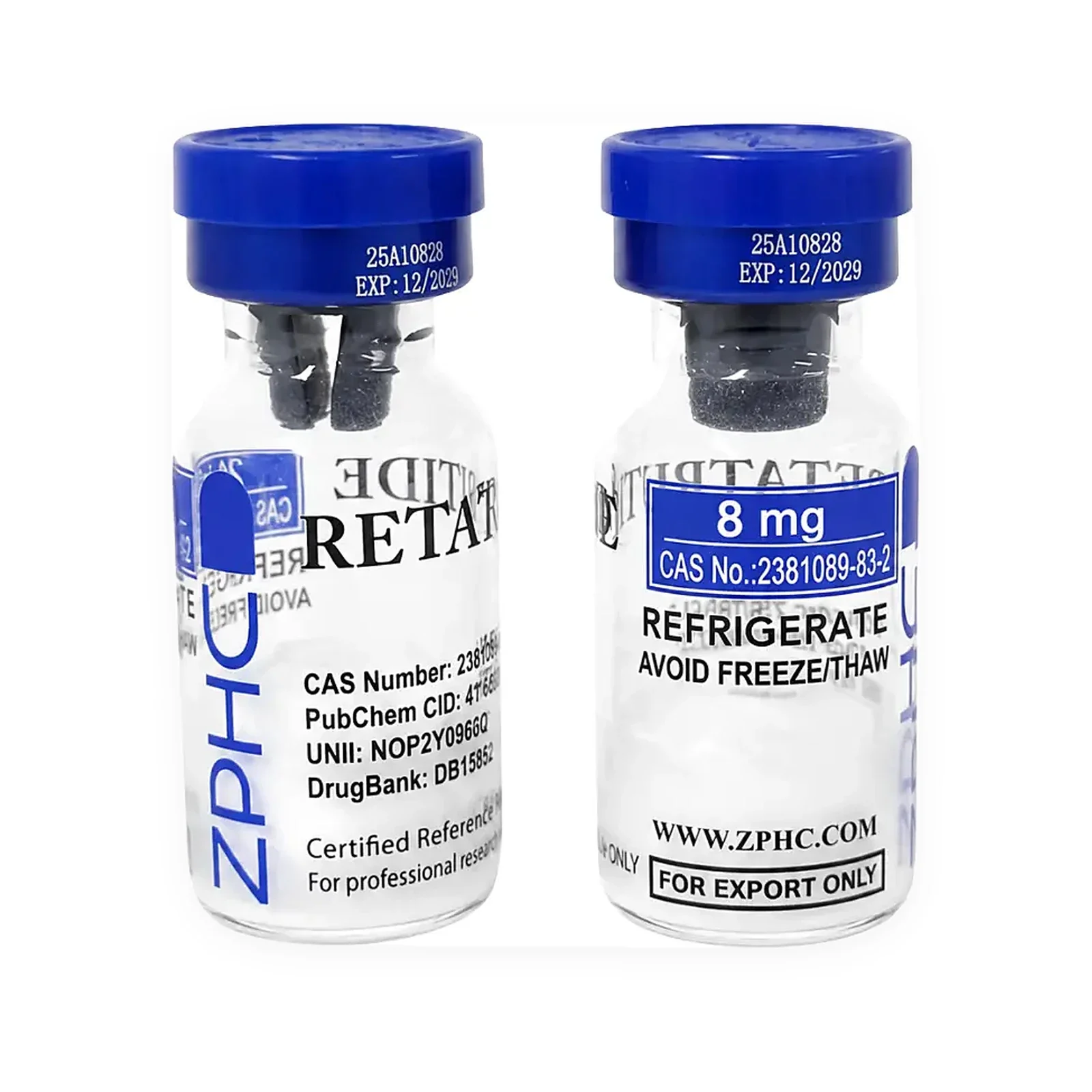
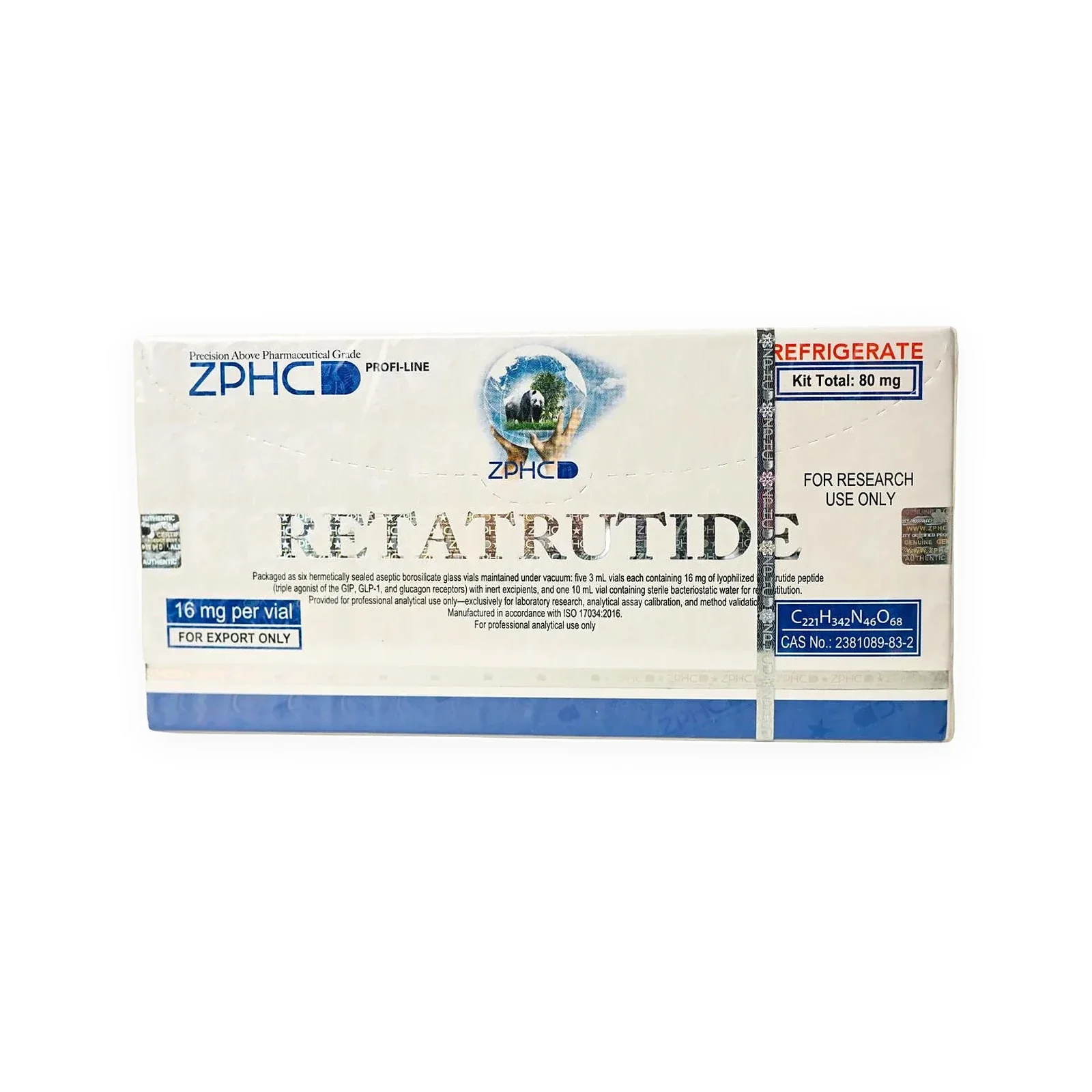
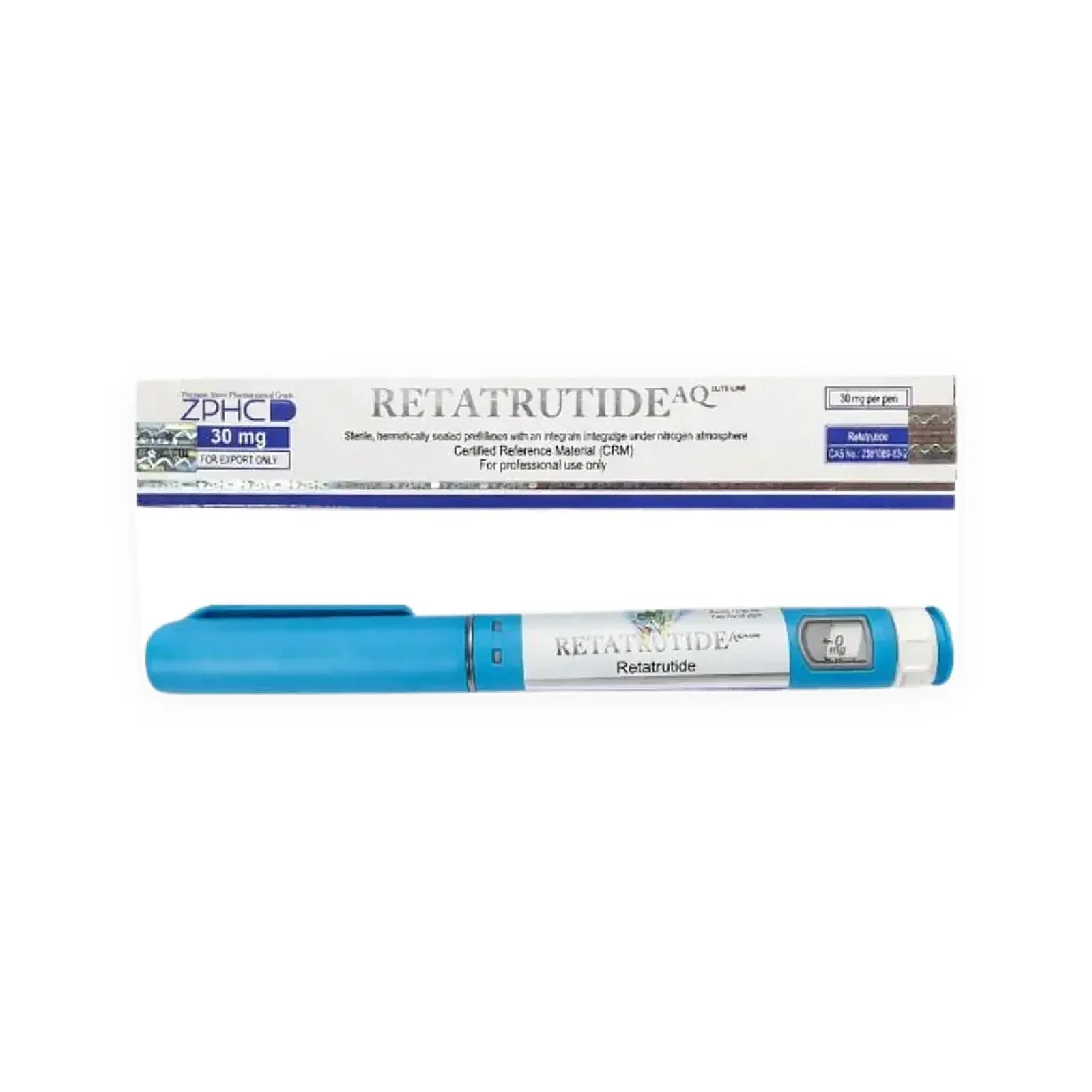
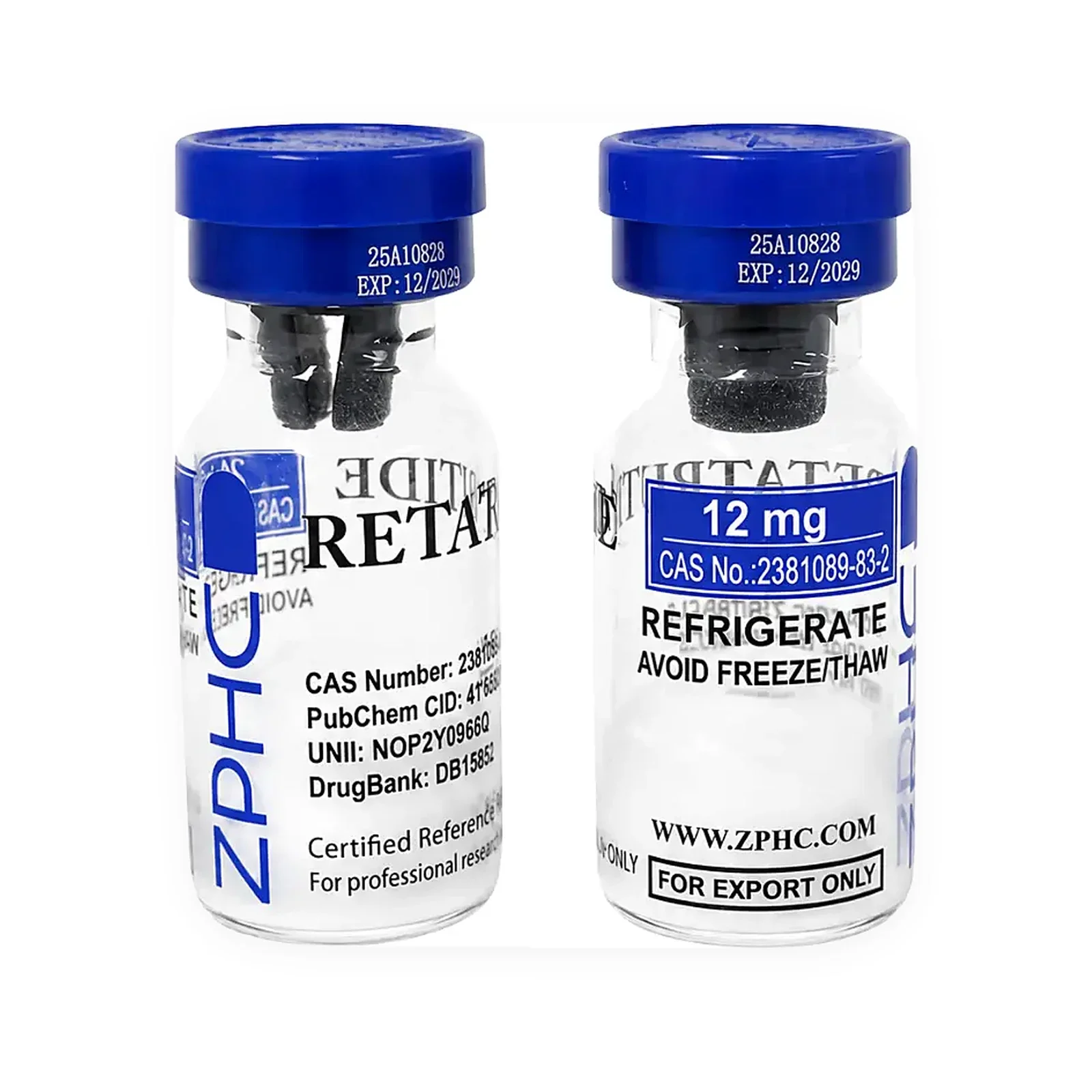
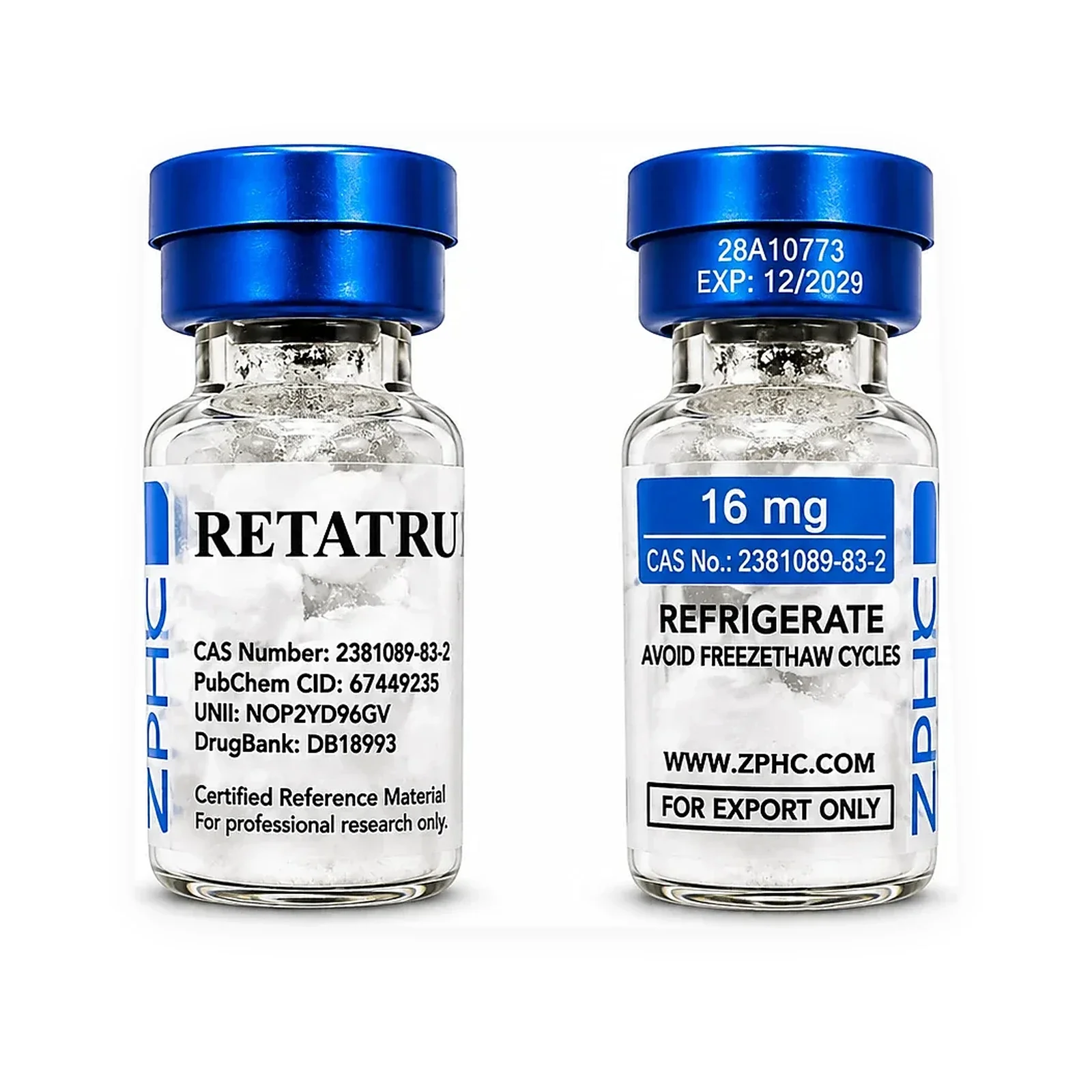
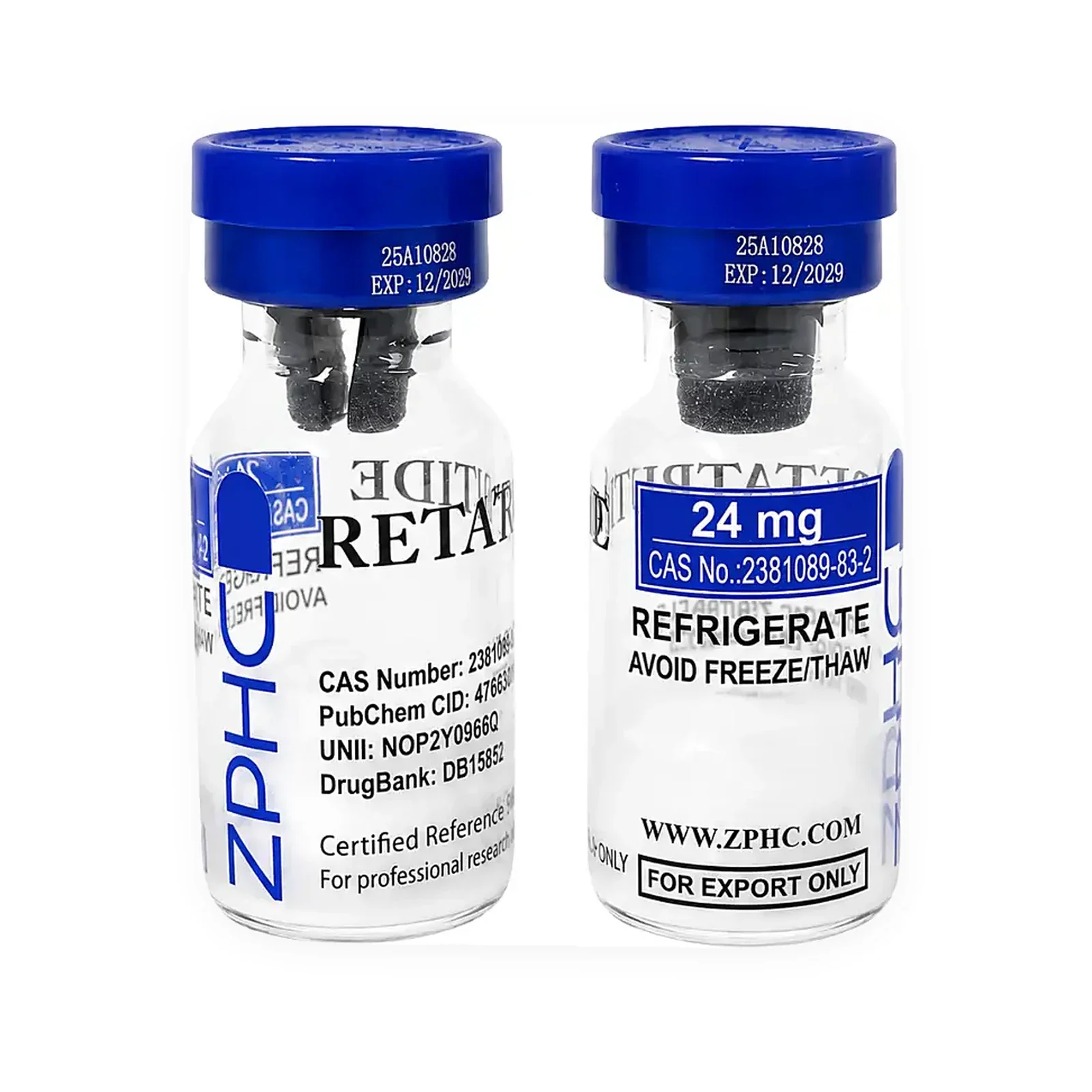
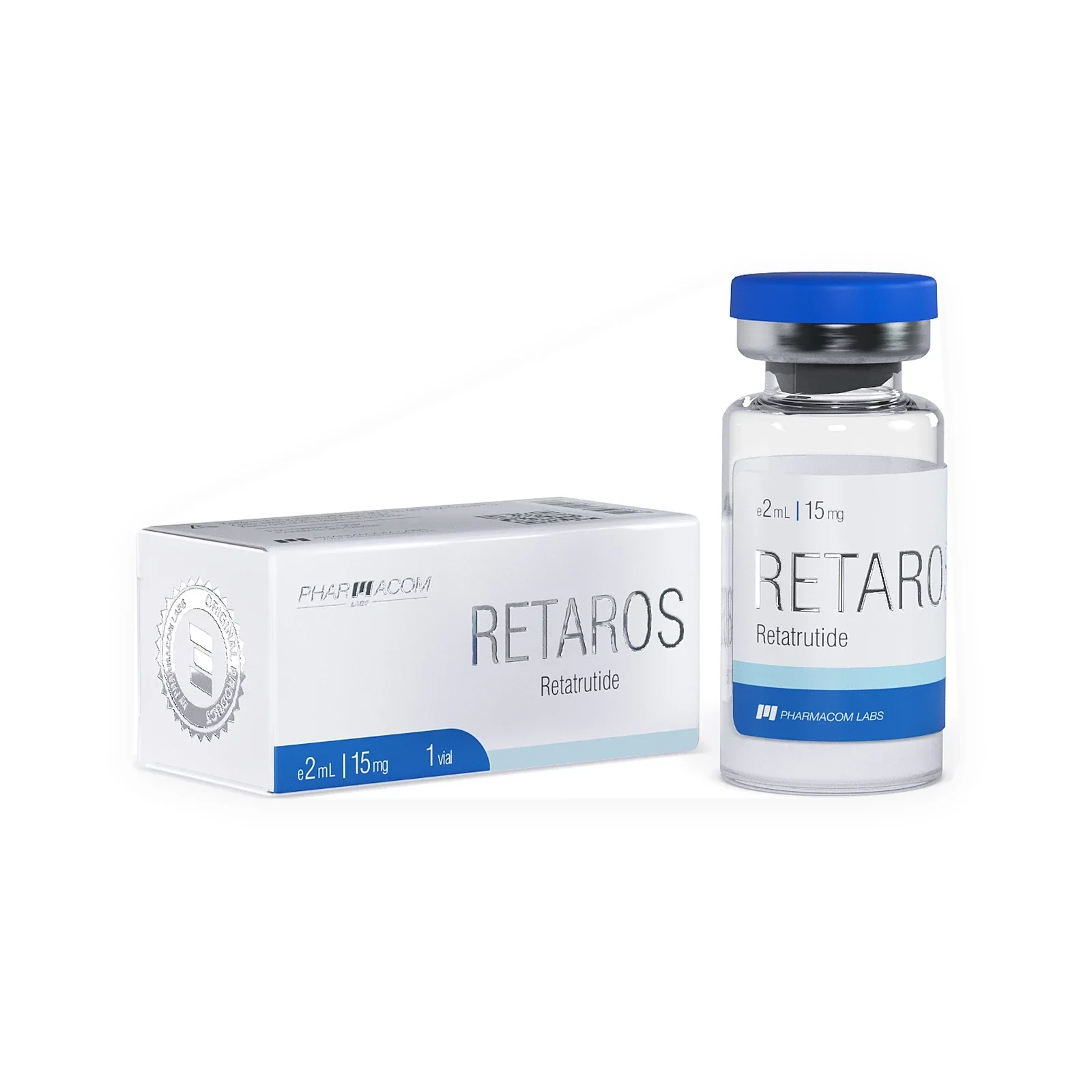
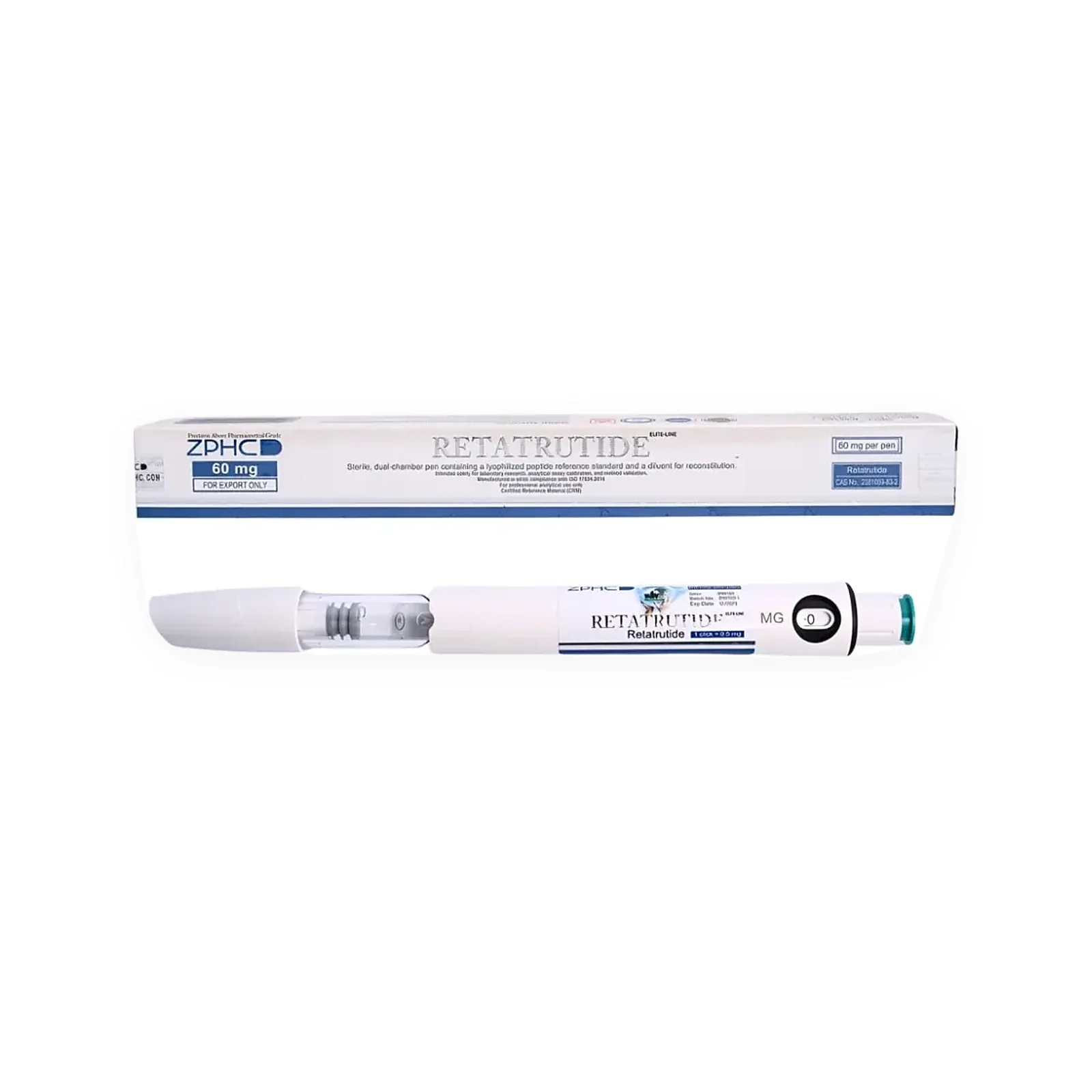
A single molecule that acts on three hormone receptors at once: GLP-1 and GIP (the incretin pair also targeted by tirzepatide) plus the glucagon receptor. Researchers are studying it in obesity, type 2 diabetes and related conditions.
Regulatory statusInvestigational. Eli Lilly announced in July 2026 that it plans to file with the US FDA in early 2027; no regulator has authorised it yet.
Human studies
- Phase 2 trial in 338 adults with obesity: researchers reported a mean body-weight change of up to −24.2% at 48 weeks in the highest-dose group, against −2.1% with placebo. NEJM 2023 ↗
- TRIUMPH-1, Phase 3, 2,339 adults over 80 weeks: Eli Lilly reported a mean change of −28.3% in the highest-dose group against −2.2% with placebo (topline results, not yet peer-reviewed). HCPLive · TRIUMPH-1 ↗
- TRIUMPH-2 (1,152 adults with type 2 diabetes) and TRIUMPH-3 (1,949 adults with cardiovascular disease) also met their main goals, according to the company. HCPLive · TRIUMPH-2/3 ↗
Adverse events recorded
- Most adverse events were gastrointestinal (nausea, diarrhoea, vomiting, constipation) and became more frequent at higher doses. In TRIUMPH-1, nausea was reported by 42.4% on the highest dose against 14.8% on placebo.
- TRIUMPH-1 also recorded abnormal skin sensation (dysesthesia) in 12.5% against 0.9%; 11.3% stopped because of adverse events, against 4.9% on placebo.
- The Phase 2 trial reported a dose-related rise in resting heart rate that peaked at 24 weeks.
Not yet establishedPeer-reviewed Phase 3 publications, long-term cardiovascular outcomes, and what happens after treatment stops.